
AI SEO in 2026 means optimizing your brand and content so that Google’s AI Overviews, ChatGPT, and Perplexity choose you as a cited source when they generate answers, not just ranking you as a blue link. This requires classic SEO fundamentals plus Answer Engine Optimization (AEO) and Generative Engine Optimization (GEO) clear, extractable answers, strong entities and schema, real expertise, and a visible brand footprint across the wider web.
What “AI SEO in 2026” Actually Means
AI SEO in 2026 is the practice of optimizing for AI‑driven answer systems, such as Google AI Overviews, Gemini, ChatGPT, and Perplexity, rather than only for the traditional 10 blue links. These systems run retrieval over the web, select a handful of “trusted” sources, then synthesize an answer, often citing 3-10 sites prominently in the interface.
Two related concepts sit under AI SEO: AEO (Answer Engine Optimization), which focuses on concise, verifiable answers AI can quote, and GEO (Generative Engine Optimization), which focuses on structuring content in ways that generative models can easily parse, summarize, and reuse.
How Google’s AI Overviews Work
Google says AI Overviews and AI Mode still rely on the core Search pipeline: they use the same ranking systems and then generate summaries that link out to relevant pages. AI Overviews appear on queries where Google believes an AI summary adds value, typically for complex questions, comparisons, or multi‑step tasks, rather than every search.
An analysis shared in SEO communities suggests AI Overviews are now showing on 50%+ of many monitored query sets, and clicks are shifting toward fewer but stronger brands. Practitioners report that when their pages are already strong in classic SEO (ranked on page 1, good E‑E‑A‑T, clean schema), those same pages are most likely to be cited inside AI Overviews.
How ChatGPT and Perplexity Use Your Content
When browsing is enabled, ChatGPT runs a live search, opens a small set of pages, then generates an answer with 3-5 “Source” cards or sidebar references. Tests shared by SE Ranking show that ChatGPT sometimes cites pages ranked 20-30 on Google, as long as the content provides a complete, well‑structured answer to the question.
Perplexity always performs real‑time search and tends to cite more sources per answer than ChatGPT, often pulling 8-15 references, including blogs, documentation, and YouTube videos. A 6.8M citation study by Yext found that ChatGPT leans heavily on third‑party listings and directories (Yelp, TripAdvisor, MapQuest, etc.), while Perplexity is more willing to cite a mix of publisher sites, docs, and niche blogs.
What SEOs Are Seeing on the Ground
On r/TechSEO and r/SEO, practitioners report that informational “what is X” posts have lost traffic as AI Overviews answer those queries directly, while experience‑based or “how I solved X” content is growing. One Reddit case study described a 40% decline in generic definitional content but a 60% uplift in personal, test‑driven posts with screenshots, before/after data, and clear outcomes.
Multiple Reddit threads say that pages appearing in AI Overviews almost always already have strong traditional rankings, robust schema, and solid backlinks, and that “AI optimization” is more like tightening structure and experience on top of regular SEO. Practitioners also report that adding detailed FAQ sections and richer schema (FAQPage, HowTo, Product) increased AI Overview impressions, even when classic rankings barely moved.
Core Principles of AI SEO and AEO
Across leading SEO blogs and agency tests, several principles recur: start each page or H2 with a 40-60 word direct-answer block, then go deeper with explanations, examples, and visuals. Use short paragraphs, bullet points, and tables so models can quickly map sections to common questions and extract clean snippets.
AI systems reward E‑E‑A‑T: real experience, demonstrated expertise, authoritative sources, and visible trust signals such as author bios, case studies, citations, and secure, well‑maintained sites. They also favor pages with up‑to‑date facts, clear entities (company, product, location), and a schema that turns those entities and facts into machine‑readable data.
GEO: Writing “AI‑Readable” Content
Generative Engine Optimization (GEO) is about making content easy for AI to scan, chunk, and reuse. Practitioners recommend:
- Framing headings as questions (What is…? How does…? Best tools for…?) and answering directly in the first 1-2 sentences below each heading.
- Keeping key definitions under about 2-3 short sentences before expanding into detail.
- Using consistent terminology throughout so models don’t have to guess whether “AI SEO,” “AEO,” and “GEO” refer to different concepts.
One GEO guide reports better AI Overview visibility after adding question‑based H2s, tightening intro answer blocks, and enriching pages with FAQ schema and internal links to related answers. Another agency notes improved AI citations once they standardized structure across content hubs: intro summary → definition → steps → examples → FAQ.
Structuring Pages for AI Overviews
SEO case studies from Jen Ruhman, NoGood, and Zensciences converge on a similar pattern for AI Overview‑friendly pages:
- Start with a 2-3 sentence summary answering the core query in plain language.
- Break each major subtopic into its own H2 with a short, direct answer before the explanation.
- Add an FAQ section targeting very specific, long‑tail questions that users and AI are likely to ask.
- Use bullet lists and tables to capture comparisons, steps, pros/cons, and checklists.
NoGood’s AEO framework (CSQAF) emphasizes including Citations, Statistics, Quotations, Fluency, and Authoritativeness in your content so that AI systems can verify claims, cross‑check with other sources, and safely quote you. Zensciences found that adding 40-60 word answer blocks, schema, topical clusters, and explicit author credentials significantly improved AI search inclusion for enterprise clients.
Using Schema and Entities as “AI Hints”
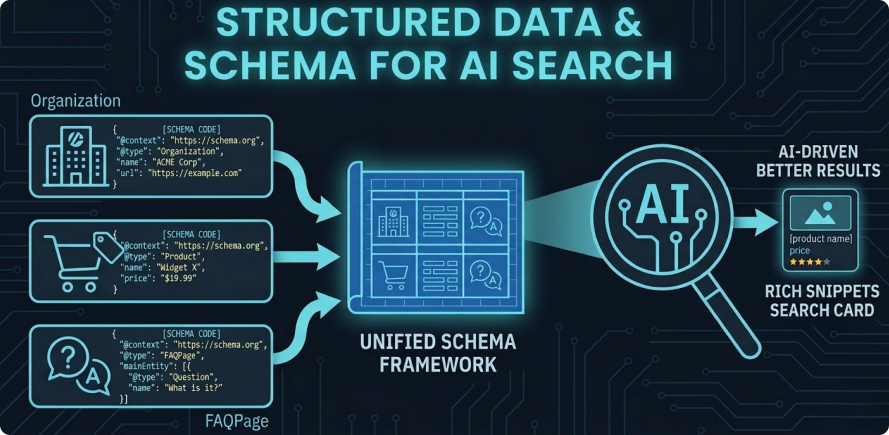
Several practitioners on Reddit and in SEO blogs stress that structured data behaves like a “data feed” for AI: prices, ratings, dates, and business details become clear facts instead of fuzzy text. Google notes that AI features use the same index and signals as Search, and structured markup helps them understand and surface pages more reliably.
Actionable schema priorities for AI SEO in 2026:
- FAQPage and HowTo on in‑depth guides and service pages.
- Article/BlogPosting with author, datePublished, and headline fields filled accurately.
- Organization and LocalBusiness with logo, sameAs links (LinkedIn, Clutch, Crunchbase), and consistent NAP for entity recognition.
- Product, Service, and Review schema on commercial pages where pricing, features, and social proof matter.
UGC reports say that after adding FAQ and HowTo schema across 10-20 key posts, some SEOs saw double‑digit percentage increases in impressions from AI Overviews, even when organic rankings were flat.
Building Topical and Entity Authority
LinkedIn practitioners who successfully got clients cited as “#1 brands in their niche” by ChatGPT emphasize topical authority and entity clarity. Their playbook: cover a topic with a dense cluster of posts (definitions, comparisons, how‑tos, pricing, alternatives), interlink everything, and use schema and sameAs links to connect the site to authoritative third‑party profiles.
Yext’s AI visibility study found that nearly half of ChatGPT’s citations came from third‑party listings and directories, not brand sites, which means your entity needs to be present and consistent across Yelp, G2, Capterra, TripAdvisor, Google Business Profile, and similar platforms where applicable. UGC from SEOs backs this up: brands that appear in AI answers usually have strong profiles and reviews on these external sites, not just good on‑page SEO.
Content Types AI Is Favoring (vs. Losing)
Forum discussions consistently report that thin, generic TOFU content (“What is CRM?”, “What is SEO?”) is declining as AI Overviews and LLMs provide instant definitions. In contrast, content grounded in first‑hand experience, case studies, original data, and local knowledge is more likely to be cited and still drives traffic.
One SEO on Reddit described shifting strategy into three buckets: detailed, data‑driven resources AI can safely quote; experience‑driven posts that AI finds harder to synthesize from generic sources; and agile content on breaking changes or ultra‑specific long‑tails where models have sparse training data. That shift aligned with their analytics: informational glossaries dropped, but “how we fixed X” and “what happened when we tested Y” type articles grew strongly.
Optimizing for ChatGPT Answers
Agency experiments summarized by Geneo and SE Ranking suggest that you don’t need to rank top 10 in Google to be cited by ChatGPT, but you do need to provide a complete, structured answer and be discoverable via Search. What worked best in those tests:
- Publishing “answerable” content with question‑style H2s and direct 1-2 sentence answers under each.
- Citing trusted sources and including numbers, examples, and step‑by‑step frameworks that LLMs can reuse.
- Submitting URLs via Google Search Console to speed up indexing and using tools that track where AI engines reference your domain.
LinkedIn practitioners also highlight adding Organization, Product, and FAQ schema; cleaning up crawlability (no blocked JS‑rendered content); and ensuring that author bios, About pages, and testimonials clearly state who you are and why you’re credible.
Optimizing for Perplexity Answers
Because Perplexity runs explicit web search and displays many citations, its bar for inclusion is slightly lower but its bar for clarity and corroboration is still high. Tests from AI‑visibility tools and SEO blogs show Perplexity tends to favor:
- Pages with clear answer blocks and logically segmented sections it can quote.
- Content that aligns with what several other reputable sources say (model preference for “consensus”).
- YouTube videos and docs with clean titles and descriptions that match the query and contain chaptered explanations.
For ITXIT Pro, that means pairing your long‑form AI SEO content with short explainer videos on YouTube (e.g., “How to optimize for Google AI Overviews in 5 steps”) and embedding those on your site so Perplexity sees both the page and the video as a coherent resource.
Brand‑First Strategies: Getting Mentioned Even Without Clicks
AI SEO is increasingly about brand visibility inside answers, not just traffic. A Goodman Lantern playbook for LLM visibility recommends winning citations in places models already trust news outlets, niche blogs, and high‑authority directories, so your brand name appears inside sources the models read. When those articles quote you with your company name and category, models learn to associate your brand with that topic.
LinkedIn practitioners also stress republishing and repurposing your best content on AI‑favored platforms like Medium, Reddit, Substack, ProductHunt, and GitHub, because these ecosystems are heavily crawled by LLMs. In practice, that might mean posting a condensed “AI SEO in 2026” playbook on Medium and referencing back to your detailed guide on itxitpro.ae, plus sharing real experiments on r/SEO with links to your case studies.
Practical On‑Page Blueprint for AI SEO Content
For a pillar post like “AI SEO in 2026” on itxitpro.ae, a proven blueprint would look like this (aligned with AEO/GEO best practices):
- H1: 40-60 word summary that directly answers “What is AI SEO in 2026?”
- H2: What is AI SEO? Question‑style heading, 2-3 sentence definition, then deeper explanation.
- H2: How Google AI Overviews work with a short answer, then bullets for triggers, ranking factors, and risks.
- H2: How to optimize for AI Overviews with a checklist (answer blocks, schema, FAQ, internal links).
- H2: How to get cited by ChatGPT and Perplexity with clear steps and examples.
- H2: Case study or experiment section, sharing your own tests (traffic impact, AI citations, schema changes).
- FAQ block with hyper‑specific questions (“Can AI Overviews show sites beyond the top 10 results?” “What schema helps AI SEO?”).
Each section should start with a short, extractable answer; include at least one statistic, example, or quote; and use schema to mark up FAQs and any how‑to sequences.
Technical and UX Foundations Still Matter
Google’s own AI Search documentation reiterates that AI features rely on the same index and core ranking systems, so technical SEO and page experience remain non‑negotiable. Fast loading, mobile‑friendly layouts, safe browsing, and clean internal linking help both Search and AI components discover and trust your pages.
97th Floor’s generative AI optimization guide and other agencies emphasize accessibility and clarity: avoid burying key information behind heavy JavaScript, use semantic HTML, and ensure headings actually describe the content below them so retrieval systems can map questions to sections. For itxitpro.ae, that means treating Core Web Vitals, crawlability, and information architecture as part of AI SEO, not separate from it.
A 10‑Step AI SEO Action Plan for 2026
- Audit existing content for AI‑readiness
- Add 40-60 word answer blocks at the top of key service pages and blogs.
- Turn long, unstructured sections into question‑based H2s with direct answers.
- Build AI‑focused schema across the site
- Implement FAQPage, HowTo, Article, Organization, and LocalBusiness schema where relevant.
- Add sameAs links to LinkedIn, Clutch, GoodFirms, and any major directories where ITXIT Pro is listed.
- Create an AI SEO topic cluster
- Core pillar: “AI SEO in 2026: How to Optimize for Google AI Overviews, ChatGPT, and Perplexity.”
- Supporting posts: GEO vs AEO, AI Overviews experiments, AI SEO case studies for UAE, how to measure AI citations.
- Interlink everything heavily.
- Publish experience‑driven case studies
- “What happened when we added FAQ schema to 20 pages”
- “Traffic changes after AI Overviews in [client industry]”
- Include charts, before/after data, and qualitative learnings.
- Optimize entity and directory presence
- Clean and unify NAP, descriptions, and categories across Google Business Profile, Clutch, GoodFirms, local UAE directories, and relevant SaaS marketplaces.
- Repurpose to AI‑favored platforms
- Shorten your AI SEO guide into Medium, LinkedIn, and Reddit posts with canonical or contextual links back to your site.
- Share code snippets, schemas, or tools on GitHub where appropriate.
- Add YouTube content for key topics
- Short (3-8 minute) explainers for “AI SEO in 2026,” “Optimize for AI Overviews,” and “Get cited by ChatGPT/Perplexity.”
- Use descriptive titles and chapters that mirror your on‑site headings.
- Tighten technical SEO for retrieval
- Ensure no critical pages are blocked by robots.txt or fragile JS rendering.
- Maintain fast loading and clean HTML structure so crawlers and models can parse easily.
- Track AI visibility as a separate KPI
- Manually test how often ITXIT Pro appears in AI Overviews, Gemini, ChatGPT web answers, and Perplexity for target queries.
- Use tools like SE Ranking’s AI visibility features or internal tracking sheets for prompts and citations.
- Iterate with public experiments (UGC loop)
- Share your AI SEO experiments transparently on LinkedIn and r/SEO / r/TechSEO, including what worked and what didn’t.
- Link back to deeper write‑ups on your blog so those UGC mentions become part of your entity footprint in model training data.
Final Thoughts: Think “Be the Source,” Not “Beat the AI”
SEO practitioners on Reddit and LinkedIn increasingly agree: you will not “beat” AI Overviews or LLMs by trying to hoard all the traffic they will summarize regardless. The winning mindset is to become the source these systems trust enough to quote, so that your brand is present wherever your audience asks questions, even if they don’t always click.
That means combining classic SEO fundamentals with AEO/GEO, schema, entity work, and a visible, experience‑rich brand across the open web. Done well, AI SEO in 2026 can make ITX IT Pro the default name users see when they ask any AI, “How do I optimize my site for the AI era?”





Frequently Asked Questions
AI SEO is the practice of optimizing your content so AI systems like Google’s AI Overviews, ChatGPT, and Perplexity can easily find it, understand it, and safely quote it in their answers. It builds on traditional SEO but focuses more on clear answers, entities, schema, and being a trusted source than on just blue‑link rankings
Traditional SEO focuses on ranking pages in search results; AEO (Answer Engine Optimization) focuses on winning direct answers and zero‑click results; GEO (Generative Engine Optimization) focuses on making content easy for AI models to read and synthesize. In practice, they overlap: you still need solid SEO, but you also design content for extractable Q&A, summaries, and schema‑rich structures AI can reuse.
Start by making sure the page already deserves to rank: strong on‑page SEO, internal links, good Core Web Vitals, and topical authority in that niche. Then:
- Add 40-60 word answer blocks at the top of the page and under each major H2.
- Use question‑based headings (“How does…?”, “What is…?”), FAQ sections, and FAQPage/HowTo schema.
- Keep answers concise first, then elaborate, because AI Overviews favor clear, short snippets they can quote.
Keywords still matter, but they are now the starting point, not the goal. AI engines map keywords → intent → entities → answers, so you should:
- Research questions and long‑tail phrases, not just head terms.
- Make sure the right entities (brand, product, location, topic) are obvious in text and schema.
- Use natural, conversational language that matches how users actually ask questions.
Tests from SE Ranking, NEURONwriter, and agency playbooks show consistent patterns:
- Publish complete, well‑structured answers to real questions (not thin definitions).
- Use self‑contained paragraphs and Q&A blocks that are easy to copy into an answer.
- Add author bios, outbound citations, and internal links to build authority and context.
- Ensure the page is indexed and healthy in Google Search Console; many cited pages are not top‑10 but are clean, authoritative resources.
Schema acts like a data feed that tells AI systems exactly what a page contains: questions, answers, products, prices, authors, business info, and more. FAQPage, HowTo, Article, Organization, LocalBusiness, and Product schema are especially useful because they package content in a structured way AI Overviews, ChatGPT, and Perplexity can trust and extract from.
Evidence from AEO/GEO guides and AI‑citation experiments points to a few simple rules:
- Turn major headings into the exact questions people ask.
- Put a direct answer (30-50 words) immediately under the heading, with no links in that first block.
- Then add details, examples, tables, and lists below the answer.
- End the page with an FAQ section that covers very specific, long‑tail questions.
Beyond organic traffic and rankings, you should measure:
- How often your site or brand appears in Google AI Overviews for target queries.
- How often ChatGPT or Perplexity cite your domain when you prompt them with those queries.
- Growth in impressions and clicks for rich results (FAQ, HowTo, snippets) in Google Search Console after adding AEO/GEO structures.
No, GEO and AEO sit on top of SEO, not instead of it. Courses and playbooks consistently say: without solid technical SEO, quality content, and authority signals, AI engines will not trust or even see your pages, regardless of how “AI‑optimized” the copy looks.
User‑generated discussions and SEO forum threads show that thin definitional content is losing traffic, while content with real experience and depth is holding or growing:
- Case studies, experiments, and “here’s what happened when we tried X.”
- Niche comparisons, local insights, and implementation details AI cannot safely hallucinate.
- Step‑by‑step tutorials with screenshots, code, or templates that users need to copy.
AI systems favor pages that stay current on fast‑moving topics like AI tools, platform features, pricing, and regulations. For core AI SEO and AEO/GEO guides, aim to:
- Review and update at least quarterly.
- Refresh statistics, tool references, and screenshots when platforms change.
- Adjust headings and FAQs based on new questions you see in forums, PAAs, and your own search logs.
Yes, but not by copying generic “ultimate guides.” UGC and AI‑SEO studies show smaller sites get cited when they:
- Go very deep on a narrow niche and build strong topical clusters.
- Offer unique data, experiments, or local knowledge bigger sites don’t have.
- Maintain clean technical SEO and strong author/entity signals so models can safely trust them.
Author Bio

Discover More Collaborative Development Initiatives
Stay ahead of the curve with expert tips, industry trends, and
actionable strategies—designed
to help your business thrive in the digital era.












 UAE
UAE
1801, API World Tower, SZR, Dubai,
United Arab Emirates
 India
India
Jaipur, Rajasthan
 USA
USA
Charlotte, United States
 CANADA
East Scarborough, Canada


