
In 2026, people in the UAE are not just typing on screens; they are talking to their phones, cars, and smart speakers in Arabic, English, and a mix of both. Voice assistants like Alexa and Google Assistant are now part of daily life, with research showing that around 85% of residents in the UAE and Saudi Arabia have used a voice assistant and almost half use one regularly. At the same time, Arabic usage is rising fast, with many users saying they prefer to speak in Arabic and expect assistants to understand local accents and expressions.
This shift is quietly changing how people search for everything from nearby restaurants and salons to clinics, schools, and digital services. A growing share of those searches are happening in Arabic or Arabic‑English hybrids, and Arabic voice queries in the UAE have already seen strong year‑on‑year growth. Yet most websites in the region are still written and structured as if every user is typing short English keywords on a desktop.
This guide shows you how people in the UAE really search in 2026, what current SEO advice gets wrong about voice and multilingual behaviour, and what you actually need to change on your site so customers can find you when they speak, not just when they type.
How People in the UAE Really Search Today
It’s 10:30pm in Dubai Marina.
A father leans back on the sofa and says in Arabic, “يا جوجل، فين أقرب مطعم لبناني مفتوح الآن؟” (Where is the nearest Lebanese restaurant that’s open now?). His teenage daughter asks Siri in English, “Best burger place near me that’s still open,” and his wife taps the mic icon in WhatsApp to send a voice note to a friend: “Do you know a good paediatric clinic in JLT?”
None of them typed a single word.
This is what “search” looks like for a growing slice of UAE consumers in 2026. It’s not clean, two‑word English phrases. It’s long, spoken questions, often in Arabic or in a blend of Arabic and English, asked into phones, in cars, through smart speakers, and inside chat apps.
A regional survey on communication habits in the Middle East found that voice assistants are now part of daily life for many households, with high usage in the UAE and KSA. Another study on Alexa usage in the GCC reported that more than 80% of respondents had tried a voice assistant and almost half use one at least weekly. Importantly, a majority said they prefer speaking to assistants in Arabic and expect them to understand local accents, not just textbook Modern Standard Arabic.
If your SEO, content, and local presence are still built only around short English keywords, you’re invisible in a big part of this reality.
What the Data Says About How UAE Consumers Search in 2026
Most of the hard data about voice assistants in the Gulf comes from KSA and regional surveys, but the patterns clearly extend to the UAE behaviour:
- Surveys show very high smart‑speaker and voice‑assistant penetration in GCC households, especially among families with children and high smartphone usage.
- Arabic is gaining ground online faster than most marketers realize. Arabic is now among the top five languages on the internet by usage, and demand for Arabic‑language content continues to grow across Saudi Arabia, the UAE, and other MENA markets.
- A UAE‑focused report on business readiness for voice search notes year‑on‑year growth in “near me” searches for restaurants, clinics, salons, and government services, with more of those queries now appearing in Arabic.
This is backed by broader research into Arabic–English code‑switching. Studies from Saudi Arabia and other Arab countries show that bilingual speakers regularly mix Arabic and English in the same sentence, often because certain expressions “feel” clearer or more precise in one language. This behaviour is especially common among younger, educated users the exact group most likely to ask complex questions into their phones.
Put simply: in the UAE, voice search is already multilingual and messy by default. Any SEO strategy that assumes monolingual, neatly typed English queries is at least one step behind reality.
What UAE Voice Search Content Gets Right… and What It Misses
Search for phrases like “voice search SEO UAE” or “Arabic voice search optimization” and you’ll see the same themes repeated across agency blogs:
- “Use conversational, long‑tail keywords.”
- “Make your site mobile‑friendly and fast.”
- “Optimize your Google Business Profile.”
- “Add FAQ and LocalBusiness schema.”
All of that is correct, but very high‑level. When you analyze those posts and the SERPs they sit in, three big gaps appear:
- Almost no real examples of UAE voice queries.
Very few blogs show actual Arabic queries, or real English voice questions from Search Console, side‑by‑side with the content that answers them. - Little understanding of code‑switching and mixed queries.
Posts mention “Arabic SEO” and “English SEO” as if they are separate universes. In real life, UAE users constantly mix languages: “مطعم Indian near me”, “best محكمة family lawyer في دبي”. - Weak connection to AI Overviews and assistants.
Most content stops at “voice search” and never asks: how do these same spoken queries surface in Google’s AI Overviews, Gemini, or chat interfaces, and what does that mean for site structure, snippets, and CTAs?
The rest of this article focuses on those gaps: what UAE users actually say, how to see it in data, and what to change on your site if you want to be the answer that voice assistants and AI systems choose.
Typed vs. Spoken vs. Multilingual: How One Intent Shows Up
To make this concrete, take a simple, high‑value scenario: a woman in Dubai Marina searching for a ladies‑only gym.
- Typed English query:
“ladies gym dubai marina” - Spoken English query:
“Hey Google, what’s the best ladies‑only gym near me in Dubai Marina with personal trainers?” - Spoken Arabic query (Gulf dialect):
“يا جوجل، أبغى نادي نسائي قريب مني في دبي مارينا يكون فيه مدربة شخصية” - Mixed Arabic–English query:
“نادي ladies only في dubai marina قريب مني”
The intent is the same: a women‑only gym in Dubai Marina, ideally with personal trainers, nearby. But the shape of the query is very different. The spoken versions carry location, gender, and feature details that never appear in the short typed version.
Global voice SEO studies consistently show that voice queries are longer, more conversational, and more context‑rich than typed ones: they include “near me”, times, preferences (“open now”, “with parking”), and modifiers like “for kids” or “Arabic speaking”. UAE‑specific voice search articles and local trend reports confirm the same pattern in Arabic and English for local services.
If your content only targets “ladies gym dubai marina” in a headline and never explicitly addresses “ladies‑only”, “near you”, “personal trainers”, or “Arabic‑speaking staff”, you may technically rank for the short term but you’re not the obvious answer to the real spoken question.
How to See Real UAE Voice and Multilingual Queries in Your Own Data
You do not need a special “voice search tool” to understand how your audience speaks. You need to mine the data you already have.
1. Use Search Console as your window into speech
Pick a single important URL say, your “dental clinic in Abu Dhabi” page. In Google Search Console:
- Filter by page for that URL.
- Export the queries for the last 3–6 months.
- In the export, mark:
- Queries with question words (how, what, where, when, can, is, do, etc. in English; “كيف، أين، متى، هل” in Arabic).
- Long queries (four or more words), which are often voice‑driven.
- Any queries containing Arabic script, or obvious transliteration like “taskeen visa dubai” or “iqama renewal uae”.
This isn’t perfect, but it immediately surfaces how people actually phrase requests when they’re looking for you or for a competitor.
2. Cluster by intent, not by language
When you look at that list, do not split it first into “Arabic” and “English”. Instead, group by intent:
- All queries that clearly mean “find a paediatric clinic in JLT open tonight”.
- All queries that clearly mean “SEO agency in Dubai that can help with Arabic content”.
- All queries that clearly mean “home tutor in Sharjah for Grade 10 maths”.
You’ll quickly see clusters where some searches are in English, some in Arabic, some mixed and they all belong to the same information need.
This is a key difference between a real multilingual strategy and just “doing translations”: you solve the intent once, then express that solution clearly in each language.
3. Reality‑check those clusters in the mobile SERP
For each cluster, pick a few representative queries and run them on:
- A UAE mobile connection / device.
- In both interface languages (English and Arabic where possible).
Pay attention to:
- Does Google show a local pack, AI Overview, “People Also Ask”, or just blue links?
- Which language dominates the results? Many Arabic queries in the UAE still return mostly English pages because of content gaps.
- Whether any result actually speaks in the same way the query is phrased, or whether the SERP is full of generic, half‑relevant pages.
Where there is no strong answer in the user’s language, or no page that clearly addresses the full spoken question, you have found a real content gap.
Designing Content That Matches How UAE Users Speak
Once you understand those gaps, you can design pages that serve both humans and voice/AI systems.
Separate, first‑class English and Arabic pages
Arabic SEO research is clear: simply translating English copy into Arabic is rarely enough. You need content structured for Arabic, not just in Arabic. That means:
- Writing Arabic pages from a real brief based on Arabic queries and behaviour, not word‑for‑word translation.
- Handling dialect vs. Modern Standard Arabic carefully. For core SEO pages, MSA is usually safer, but headings and examples can reflect local phrasing where it feels natural.
- Using hreflang correctly (for example, ar-ae and en-ae) so Google can serve the right version by language and region.
Your English and Arabic versions should share the same information architecture and intent, but differ in how they express it.
Structuring a page around spoken questions
On a typical UAE service or location page:
- Open with a plain‑language summary.
Two or three clear sentences that answer: who you are, where you are, who you serve. This is what AI Overviews and voice assistants are likely to quote.
- Use subheadings that match real questions.
Instead of “Our Services”, use “What services do you offer in Dubai Marina?” or “هل لديكم أطباء يتحدثون العربية في دبي مارينا؟”
- Answer each question directly before you elaborate.
Begin each section with a short, self‑contained answer (two or three sentences) that directly tackles what’s under the heading. Then add detail, examples, pricing, or process.
- Add a compact FAQ at the bottom.
Cover three to seven specific, high‑intent questions you saw in your data (“Do you accept insurance X?”, “Is parking available?”, “Do you offer ladies‑only timings?”), and mark it up with an FAQPage schema.
This simple pattern makes it easy for voice engines, AI Overviews, and chatbots to lift the right sentence, while still giving human visitors enough depth to trust you.
Technical and Local SEO Foundations That Make Voice Possible
All the talk about voice and multilingual queries sits on top of one unglamorous truth: if your technical and local SEO are weak, you will not be picked as a voice answer.
At a minimum, UAE businesses need:
-
- Fast, mobile‑first pages. Most voice queries happen on phones or smart devices; slow pages rarely appear in featured answers.
- Accurate Google Business Profiles. For each branch or clinic: correct categories, address, hours, Arabic and English descriptions, photos, and verified phone/website links.
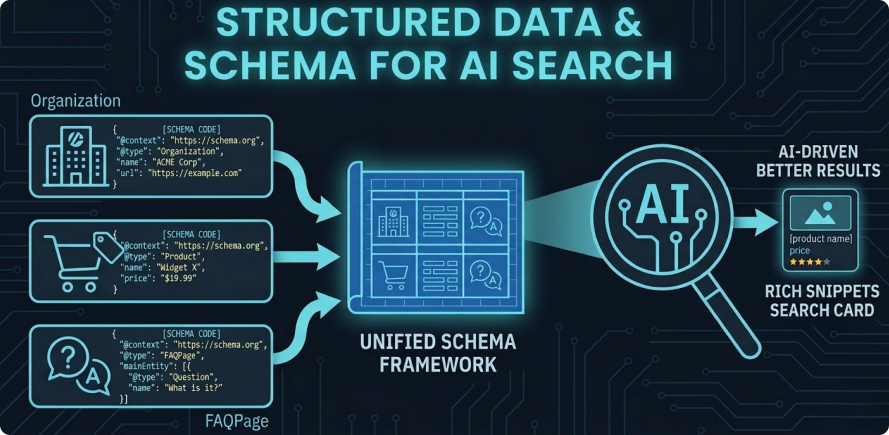
- Structured data.
-
- LocalBusiness or relevant subtype on each location.
- FAQPage on the Q&A sections you want surfaced in answers.
- HowTo on step‑by‑step guides and process pages.
- Clean internal linking and URL structure. So Google can see which pages represent your main services and locations, and use them confidently for AI Overviews and voice responses.
Google’s own documentation on AI features states that AI Overviews rely on the same index and ranking systems as classic Search, just with an extra generative layer on top. That means site speed, crawlability, and structured data you’d implement for “normal SEO” also determine whether you are even eligible to be the voice answer.
Where Voice Search, Multilingual SEO, and AI Search Meet
In 2026, most UAE users don’t think “now I use voice search” vs. “now I use AI search”. They just ask questions in whichever interface is in front of them.
A realistic journey looks like this:
- A user in Deira asks, in Arabic, for a “cheap hotel near Union metro with breakfast”.
- Google Assistant or Gemini responds with an AI Overview summarizing a few options and shows three hotel cards.
- The user taps one site, skims the key details, then hits a WhatsApp or call button.
If your site:
- Only targets “3 star hotel dubai” in English;
- Has no Arabic version;
- Doesn’t clearly mention being near Union metro or including breakfast;
then you will probably never appear in that flow. On the other hand, if your Deira hotel page:
- Exists in both English and Arabic, each with clear, spoken‑style answers;
- Has LocalBusiness and FAQ schema;
- Is linked properly in your internal structure and Google Business Profile;
you’re giving both traditional ranking systems and AI layers plenty of reasons to pick you as one of the handful of visible options.
This is where an agency like ITXITPro can go beyond generic “voice search tips” and design joined‑up strategies: voice‑style content, multilingual architecture, AI Overview optimization, and WhatsApp/lead funnels that reflect how UAE users naturally move from question to conversation.





Frequently Asked Questions
Yes. Surveys and regional reports show very high awareness and use of voice assistants in the GCC, including the UAE. Many users say they now routinely ask their devices for directions, prayer times, restaurant ideas, and quick facts, especially when driving or at home.
Both. Many Emiratis and long‑term residents are comfortable using Arabic with assistants, while expats lean on English, and younger users often mix the two in a single question. Brands that only serve English or only serve Arabic are missing a large part of the real search behaviour.
Voice queries tend to be longer, more conversational, and more specific about context. Instead of “dentist Dubai”, people say things like “Who is the best dentist near me in Dubai Marina who speaks Arabic and is open tonight?” That extra detail is useful, but only if your content actually answers it.
If you want strong visibility across the UAE, yes. Current Arabic SEO research and 2026 multilingual playbooks all stress the need for localized, native‑level Arabic content with correct hreflang and technical setup, rather than dumping machine‑translated copy onto English URLs. That’s even more important when Google has to trust you enough to be a spoken answer.
Your best source is your own data. In Google Search Console, look at longer queries, questions, and any Arabic phrases that already bring traffic. Group them by intent, then test a few in the real UAE mobile SERP to see what shows up and where competitors are weak. That gives you concrete topics and wording to target.
The biggest wins usually come from: fast, mobile‑friendly pages; complete and accurate Google Business Profiles; LocalBusiness and FAQPage schema; clean hreflang between Arabic and English; and a simple, logical internal link structure. With those foundations in place, your content has a much better chance to appear in both “near me” voice results and AI‑powered answer boxes.
Author Bio

Discover More Collaborative Development Initiatives
Stay ahead of the curve with expert tips, industry trends, and
actionable strategies—designed
to help your business thrive in the digital era.













 UAE
UAE
1801, API World Tower, SZR, Dubai,
United Arab Emirates
 India
India
Jaipur, Rajasthan
 USA
USA
Charlotte, United States
 CANADA
East Scarborough, Canada


